Coming Soon — Silent Waters: “He traded combat zones for coral reefs—but war followed him home.” Read the first 2 chapters free →
Posted by Dean M. Cole

Is It Time for Full-Duplexing Radios in Aviation? The Argument For A Safety Upgrade

Blocked Aviation Radio Calls

Is It Time for Full-Duplexing Radios in Aviation? The Argument For A Safety Upgrade

For decades, we aviators have struggled with a fundamental limitation of our communication systems: when two pilots or controllers transmit simultaneously, neither party hears the other. This technical constraint, inherent to the half-duplex communication systems used in aviation, has contributed to tragic accidents in the past. In today’s world—where even inexpensive cell phones allow seamless two-way conversations—this limitation seems outdated and avoidable. Is it time to modernize aviation radios with full-duplex capabilities?

The Current State: Half-Duplex Communication

Aviation communication systems primarily use half-duplex radios, which allow either party to transmit and receive—but not at the same time. While one party speaks, others on the frequency are effectively muted. If two transmitters key their microphones simultaneously, a heterodyne or “stepped-on” transmission results, creating a garbled noise that leaves both messages unintelligible. Moreover, when you’re the one transmitting, your speakers are muted, preventing you from hearing the interference, which further intensifies the problem. As pilots, when we hear simultaneous transmissions, we usually call out “Blocked” to inform the involved parties. However, not all calls are made on the same frequency, which can result in the interference going unnoticed by others. Additionally, in time-sensitive situations, there may not be sufficient time for a second call. This limitation persists despite the fact that most modern communication technologies—like cell phones—use full-duplex systems, which allow both parties to talk and listen simultaneously. Full-duplex technology is widely available, reliable, and affordable. Yet aviation, an industry where communication clarity can mean the difference between life and death, remains tethered to a communication paradigm designed in the mid-20th century.

Historical Lessons: Tenerife and Beyond

The deadliest aviation disaster in history illustrates the dangers of half-duplex communication. On March 27, 1977, two Boeing 747s collided on a foggy runway at Tenerife North Airport, resulting in 583 fatalities. A critical element in the chain of errors was a stepped-on radio transmission. When the KLM captain prematurely began his takeoff roll, the Pan Am crew and air traffic control tried to convey that the runway was still occupied. However, overlapping transmissions created an unintelligible squeal that contributed to the communication breakdown. Alongside procedural and human factors, this radio interference prevented the KLM crew from hearing the warning in time to avoid disaster. In the aftermath of Tenerife, the aviation industry implemented procedural and training improvements, including standardized phraseology and Crew Resource Management (CRM). However, the fundamental radio technology remains unchanged. Nearly 50 years later, half-duplex radios still pose the same risk.

And Now, Again? Blackhawk and Commuter Jet Mid-Air Collision

The recent tragic mid-air collision involving a U.S. Army Blackhawk helicopter and a commuter jet have brought this issue back into focus. Preliminary indications suggest communication challenges may have played a role, potentially including overlapping transmissions that blocked a critical warning from the tower. This is an ongoing investigation, and there are certainly other contributing factors. However, this communications shortcoming has been a pet peeve of mine for decades, so it is disheartening to see it mentioned in yet another disaster.

Why Aviation Has Lagged

The reasons aviation radios haven’t evolved mirror the industry’s overall conservative approach to technology change. Safety-critical systems undergo rigorous testing, certification, and standardization. Implementing a new radio architecture would require: 1. Revising International Standards: ICAO and national regulators would need to redefine communication standards. 2. Updating Infrastructure: Air traffic control facilities worldwide would need compatible equipment. 3. Fleet-Wide Retrofits: Aircraft from airliners to general aviation planes would require new radio systems. Despite these challenges, the transition to duplex communication is technically feasible and potentially life-saving.

The Path Forward

Aviation’s move toward digital communications, such as Controller-Pilot Data Link Communications (CPDLC), demonstrates the industry’s capacity for technological advancement. While CPDLC has proven effective in enroute and oceanic environments, it remains limited in tactical airspace, where real-time voice communication is critical. Full-duplex radios could bridge this gap, improving situational awareness and reducing misunderstandings. Introducing duplex-capable radios could follow a similar path: 1. Testing and Certification: Begin with limited trials in specific airspace. 2. Phased Implementation: Require duplex radios for newly certified aircraft while gradually phasing out half-duplex systems. 3. Crew Training: Update communication protocols to leverage full-duplex capabilities without introducing confusion.

Conclusion: Time to Break the Garble

As aviation communication transitions toward digital and satellite-based systems, the potential for full-duplex capabilities will grow. Emerging technologies, like software-defined radios and advanced modulation techniques, could enable duplexing without significantly altering existing infrastructure. By staying proactive, the industry can move closer to a future where no critical message goes unheard. The tragic lessons of Tenerife, coupled with the indications from this most recent tragedy, make one fact clear: aviation communication needs a technological upgrade. Full-duplexing radios, already a staple of everyday telecommunications, could provide pilots and controllers the ability to speak and hear simultaneously—just like we can with our cell phones. In an industry that prioritizes safety above all else, continuing to rely on outdated, one-way communication seems like an unnecessary risk. What do you think? Should aviation embrace duplex technology to ensure critical messages are never again garbled?
Posted by Dean M. Cole

A Day in the Life – Africa Part 1

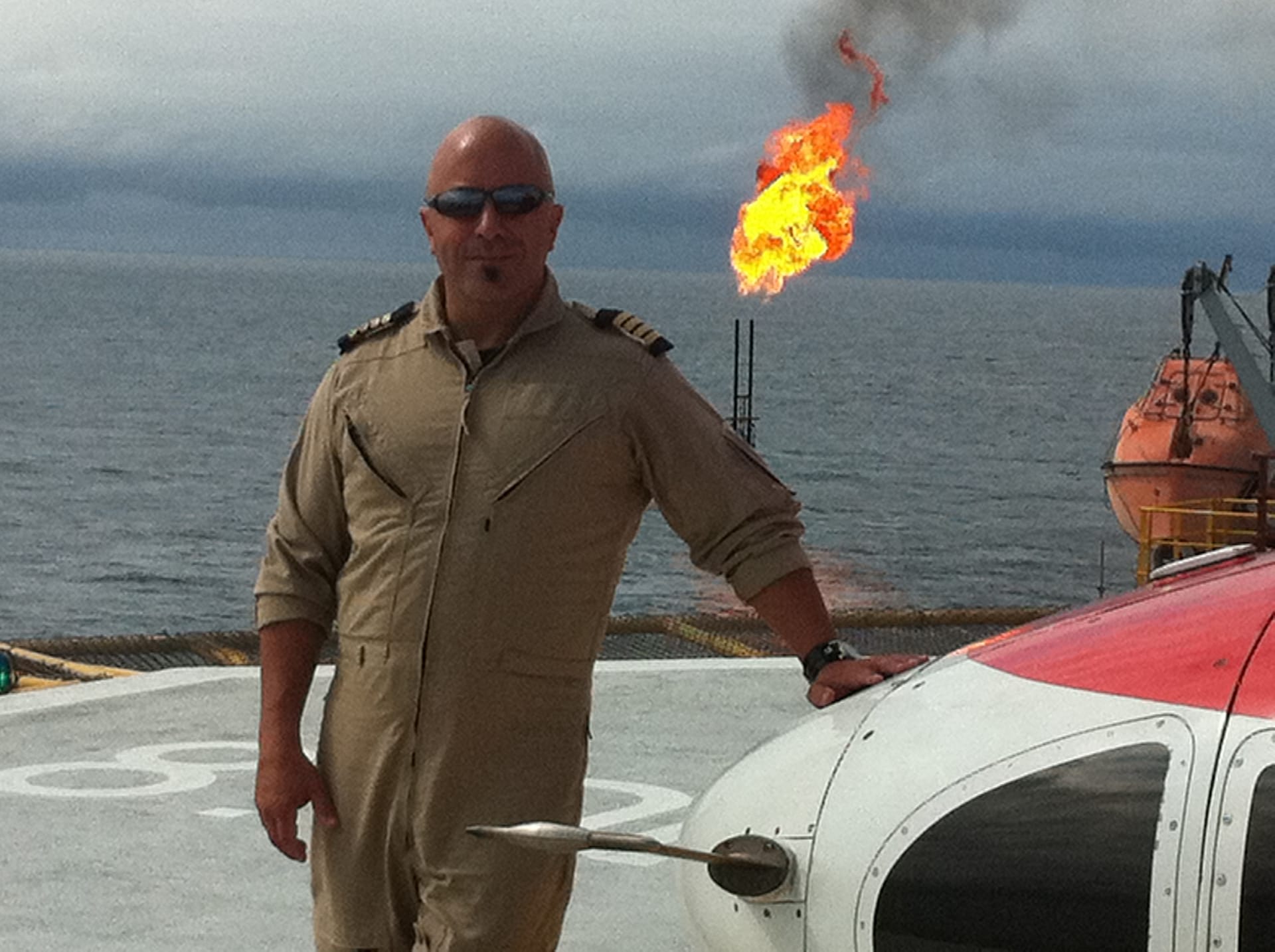
The Author at Work in the Gulf of Guinea.

I’m often asked what it’s like to work, fly, and live in Africa. This telling of the story is an amalgamation of some of my African aviation and cultural experiences. Part 1 portrays the working part of our day, while Part 2 and beyond depicts our off time and the cultural experience that is sub-Saharan West Africa.

So, without further ado:

BEEP, BEEP, BEEP!

The beautiful blonde’s smile falters, Wait don’t go.

BEEP, BEEP, BEEP!

Reaching for her hand, I grasp only air, You’re fading away…

BEEP, BEEP, BEEP!

Ah crap, it was just a dream. A smile crosses my sleepy face. But what a beauty … it was a nice dream.

BEEP, BEEP, BEEP!

Groping in the dark, I find the source of the cacophony: my iPhone. Bleary eyed and squinting, I study its face.

4:20am … Ugggh.

Thus starts a typical African day.

Resolved to begin another of my forty-two straight work days, yet not quite ready to leave the warm cocoon of my bed, I check in on a couple of my social media sites. (Love my iPhone; it’s like a miniature laptop without all the fuss.)

4:20am here equates to 10:40pm in the Central Time Zone. Various friends are wishing each other good night. I throw out a few goodnights/mornings.

Fully awake I slide from under the covers into the air-conditioned room’s chilly air. Proud of my manhood, yet concerned the effects of cold-induced shrinkage might become permanent, I quickly wrap a towel around myself, grab my shaving kit, and head for the warmer climes of my bathroom.

Thirty minutes later—showered, shaved, and dressed—we head to work. On this contract, we fly our helicopters out of Malabo’s Santa Isabel Airport.

It’s Saturday, we only have one flight today. Scheduled for a six AM departure, the total round trip should take less than an hour. One of us handles the flight planning while the other does all the day’s flying. We share the load and take turns, either flying or doing the radio/paperwork thing on an every other day basis.

Today it’s my turn to fly. (Beats working for a living.)

Flightplan filed, passengers loaded, and engines started, we receive our movement clearance. As I taxi to the active runway, the non-flying pilot reads off the checklist. I confirm the items and reply in the affirmative.

Centered on the runway, checklists complete, and in position, we receive our takeoff clearance. Announcing ‘Lifting,’ I bring the fourteen-seat helicopter to a low, stationary hover, and after a final check of the instruments and flight controls, tilt the helicopter forward, increase power, and accelerate down the runway. In seconds, we accelerate through 100mph as we climb at 800 feet per minute. Crossing three hundred feet AGL (Above Ground Level), we retract the gear, turn on course, and continue our climb to 2000 feet.

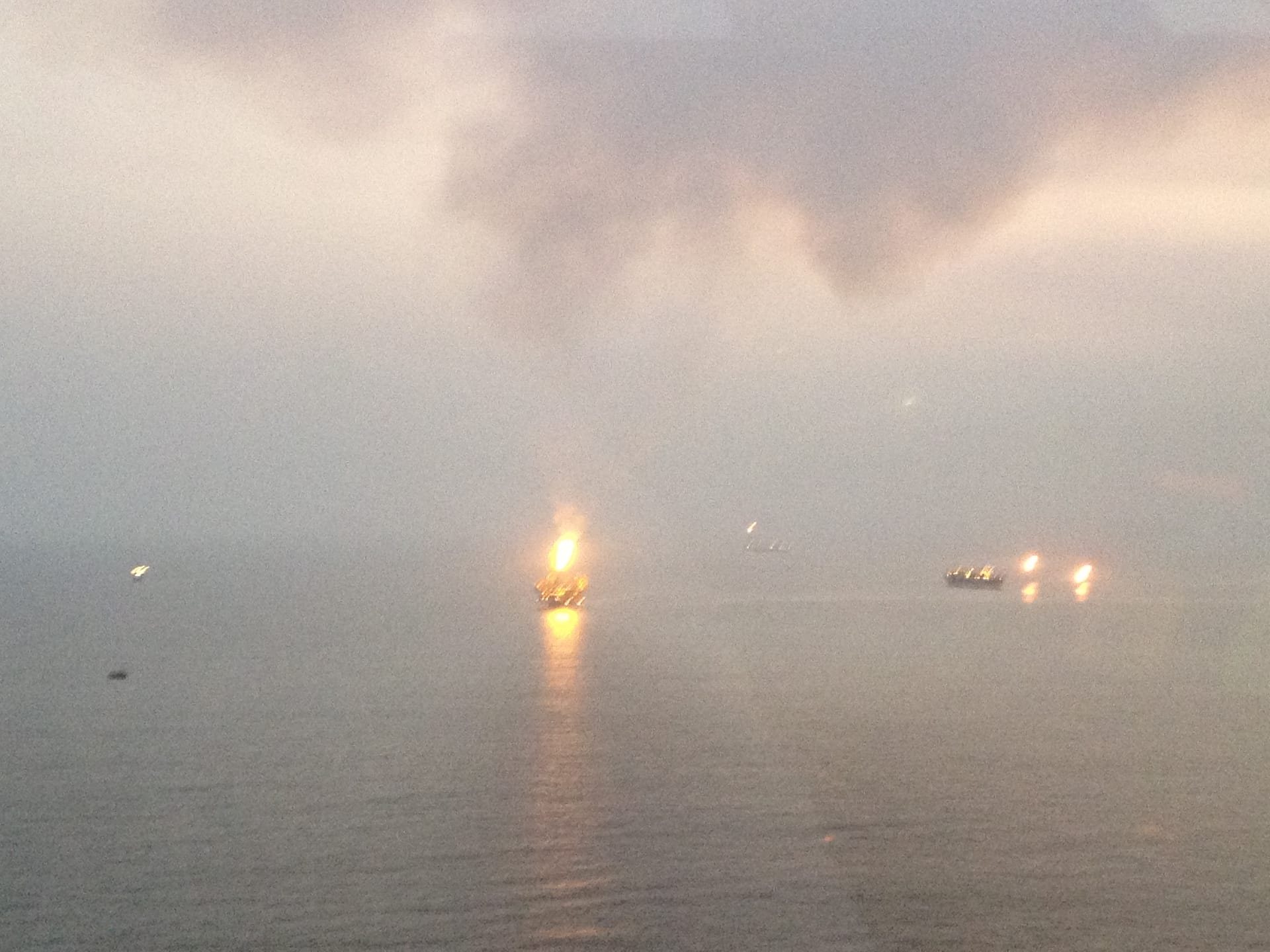
Early Morning in the Gulf of Guinea Oil Patch.

Completing all required radio calls, we navigate to the rigs, land, unload arriving passengers, and load the returning passengers. Departure checks and procedures complete, we begin our return trip to planet earth (or at least the small chunk of it known as Equatorial Guinea’s Bioko Island). En route we spot something vaguely reminiscent of a life raft—low in the water, its white edges surround central dark protrusions.

Dropping to a lower altitude, we turn to intercept and identify the object. At closer range, it hasn’t resolved. Then we spot an identifiable feature. A huge, surreal tailfin is dangling from one end of the mass. Bleached white by the sun and salt, the whale’s bloated skin and blubber are bobbing like a Styrofoam cork. The dark shapes protruding from its center are ribs and decaying entrails. A huge shark dines on the fetid feast. We see pods of whales all the time; however, this is the first dead one for us. Firm in the knowledge that, save a Joana-want-to-be, there are no sailors waiting for rescue, we turn toward the airport.

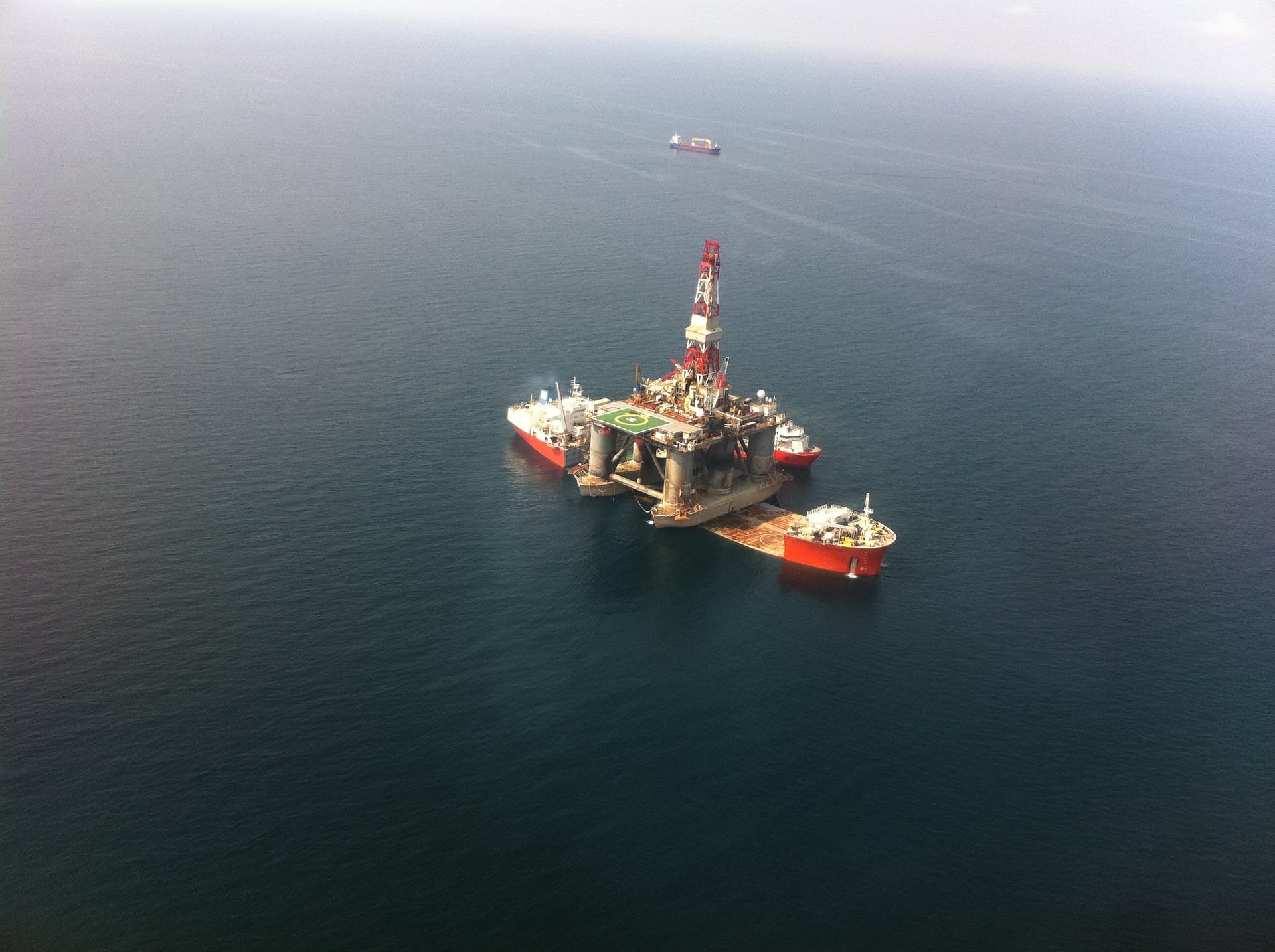
Onboard radar shows a significant line of showers approaching the airport from the opposite direction. Ordered to hold for landing traffic we orbit two miles north of the airport. This affords us the opportunity to watch as a lifting ship floats a GIANT drilling rig on its cargo deck.

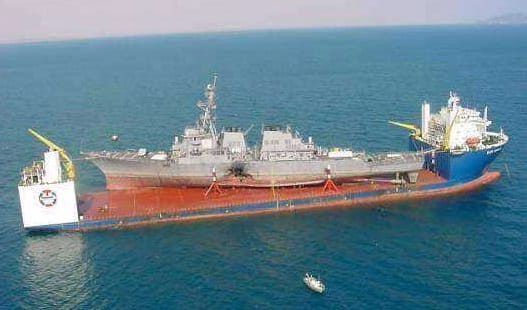
USS Cole Aboard Lifting Ship.

For scale, it’s the same class and size of the pictured vessel that brought back the USS Cole after it was bombed in Yemen.

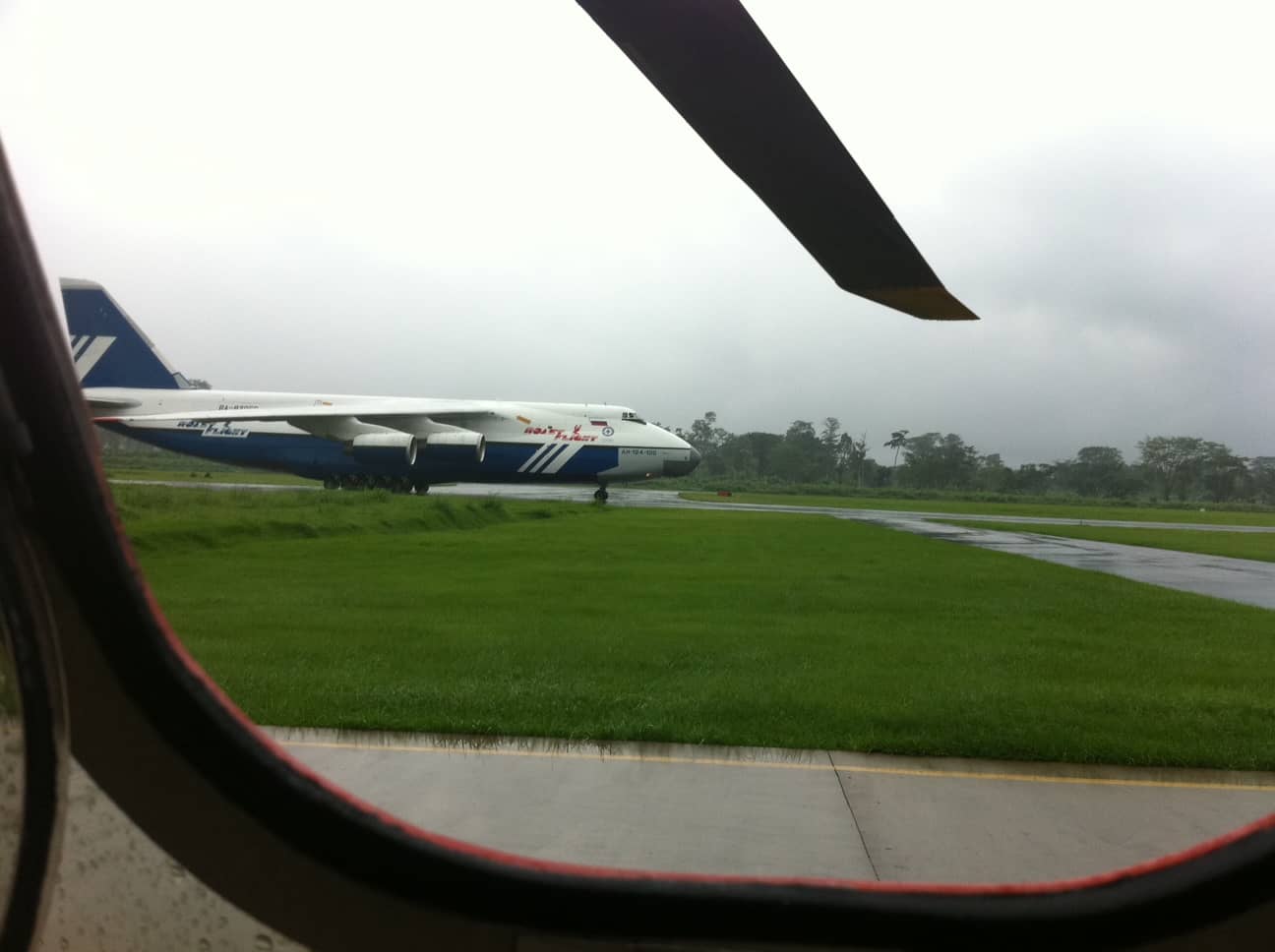
Finally cleared, and with the impressive monsoon bearing down on us, we land mid-field, abeam our hangar, and taxi the short distance to our refueling point. As we complete our shutdown, the plane that delayed our arrival taxis past. It’s an Antonov AN-124, the world’s second biggest airplane.

World's Second Largest Airplane in Malabo.

For Scale, Here's a NASA File Photo of an AN-125.

Our passengers and cargo are unloaded, and the aircraft is refueled.

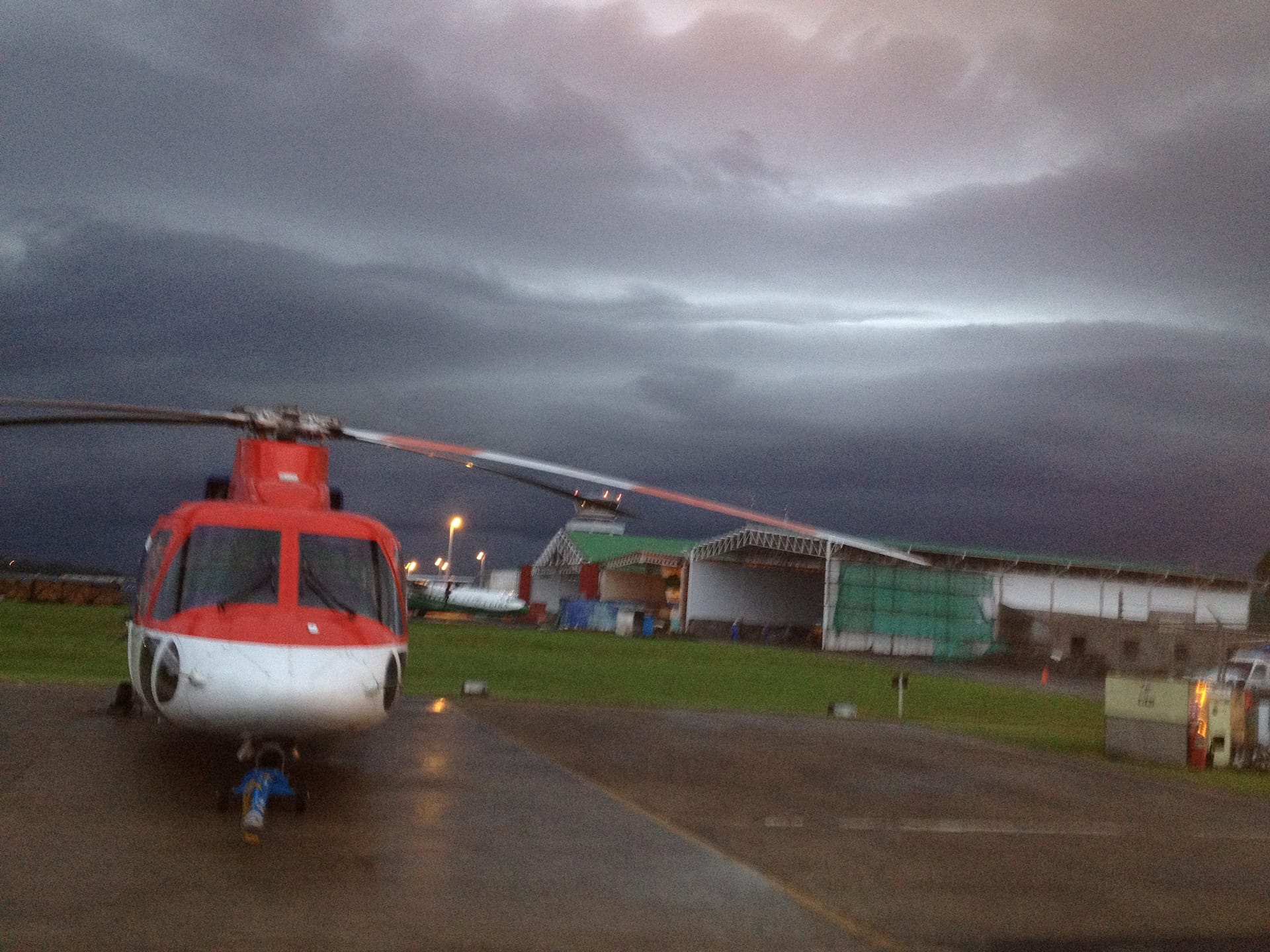
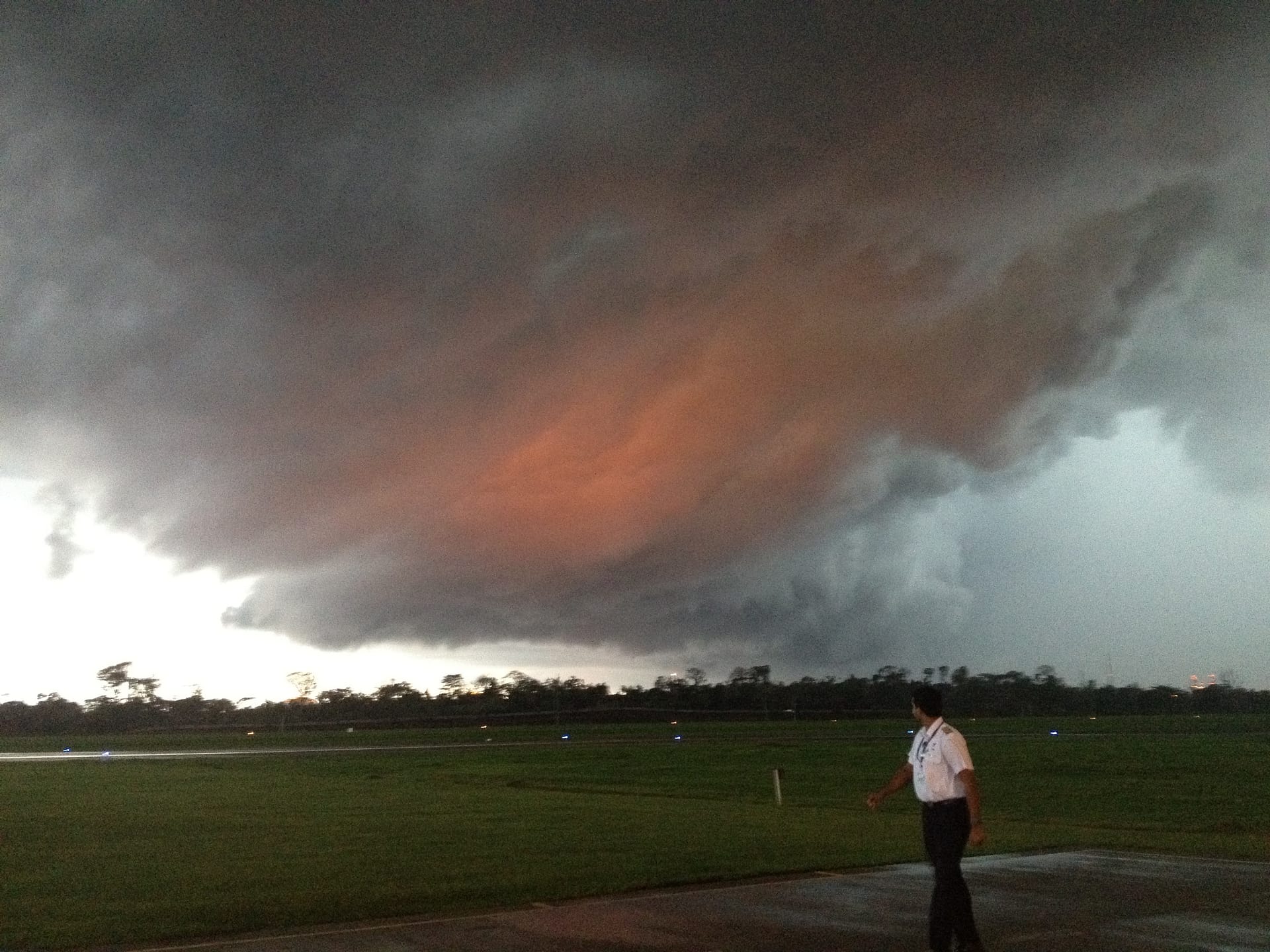
With the storm bearing down on us, the maintenance crew moves the helicopter into the hangar. The black clouds are ready to make their contribution to Bioko Island’s annual 300+ inches of rain.

Taking shelter from the downpour, we complete the paperwork, (the work is not complete until the paperwork is). Loading into the company bus, we head back to the compound.

7:30am and the day’s work is complete. This doesn’t happen often, but I’ll take it when it does. I regularly joke that I don’t work for a living. And if it wasn’t for the ever-present danger of malaria, military coups, internment in a third world prison for taking pictures (it has happened), and the(remote) potential to contract a parasite that takes six years of treatment to rid … this would be a cake job.

But I digress.

Where was I? Oh, on the way to the compound we spot a small Isuzu pickup with twelve Chinese laborers in its bed. Equatorial Guinea’s oil production has led to rapid growth and significant improvements in infrastructure. Chinese contractors do Ninety-five percent of the related construction. Ex-Soviet Ukrainian troops and Air Forces in Russian equipment provide military security. Thus I am surrounded by Chinese workers while sharing airspace and ramp-space with ex-Soviet troops and airmen in uniforms and equipment that, two short decades ago, I’d only seen in grainy black & white photos (presumably snuck out of the USSR by Cold War era spies) … who’d a thunk it.

Back at the compound, a few of us decide to head to the Sofitel Resort on the island’s northeast corner. It’s time for some spearfishing and jet skiing.

However, I’ll save that for Part 2.